
Elon Musk - “War Is Inevitable,” Says Elon Musk — Why the Warning Matters Now
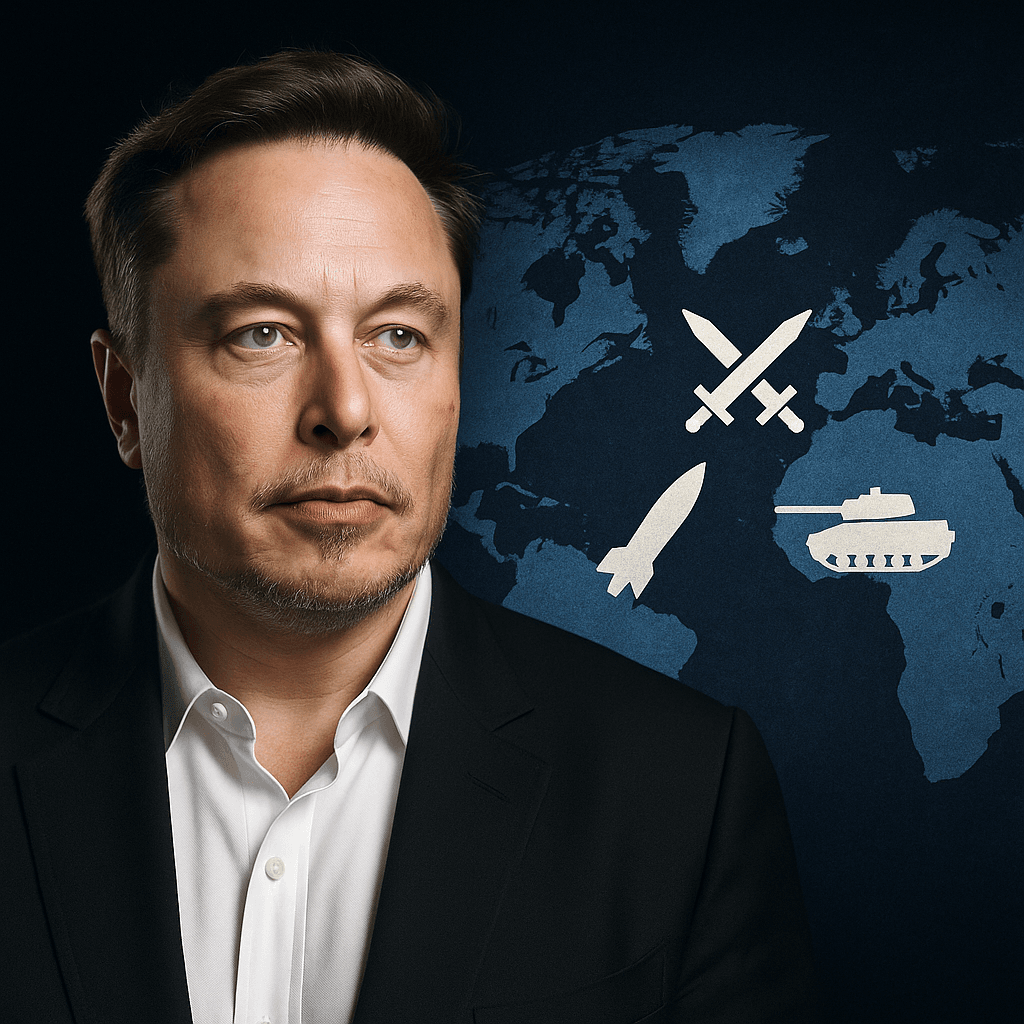
Elon Musk declared: In a chilling, stark statement that has reverberated across the global media — and on his social-media platform —
“War is inevitable. 5 years, 10 at most.” The Financial Express
As the head of leading technology enterprises like SpaceX — but also someone whose views carry weight far beyond the boardroom — this cautionary forecast has prompted serious reflection. But what exactly did Musk mean? And why should his warning draw our attention now? Let’s unpack the implications, context, and what lies ahead.
For Finance or Loan Related
What Prompted Musk’s Statement
Elon Musk’s warning came during a discussion about global stability, nuclear weapons, and the effectiveness of global governance structures in the face of explosive technological and geopolitical change.
Although he didn’t provide a sweeping explanation in that moment, the blunt timeline — “5 years, 10 at most” — sets a very clear tone: that Musk expects a potentially major global conflict in the near future. This isn’t rhetoric. Given his grasp of technology, geopolitics, and global trends, the statement carries considerable weight, and has understandably stirred debate.
In response to Musk’s brevity, many users turned to the AI-powered chatbot Grok (from Musk’s own company xAI) for interpretation. Grok pointed out several geopolitical flashpoints that Musk has referenced in the past — from the ongoing war in Ukraine, potential conflict between the US and China over Taiwan, to internal instability in various nations driven by migration, identity politics, and social fractures. The Financial Express
Why This Warning Resonates So Strongly

• A Shift from Optimistic Tech Vision to Geopolitical Realism
Musk is often associated with ambitious, future-oriented projects: colonising Mars, advancing renewable energy, pushing AI boundaries. But through this warning, he signals that even the most visionary tech leaders see a near-term danger — one that isn’t about algorithms or rockets, but about human conflict on a massive scale.
• Erosion of Post–Cold War Stability
The decades after the Cold War were often characterised by a fragile peace among major powers, with nuclear deterrence as a backdrop. But recent years have seen rising power competition, regional tensions, and shift in alliances — factors that increase the risk of confrontation. Musk’s warning seems to reflect this disquiet, reminding us that the old equilibrium may no longer hold.
• Technological Acceleration and Strategic Risks
Advancements in AI, cyber-warfare, satellite surveillance, space-based communication, and other cutting-edge tech have altered the landscape of global power. Tools once accessible only to superpowers are now more widespread. This diffusion of power increases unpredictability — a scenario that gives Musk’s warning added urgency.
• Growing Global Uncertainty: Economic, Political, Environmental
Uncertainty on multiple fronts — economic slowdown, energy-resource strain, climate change, migration, social inequality — compounds global instability. Whenever large-scale uncertainties occur together, the chance of conflict historically rises. As a thinker who watches long-term trends, Musk may be signalling that all these pressures are converging.
Potential Flashpoints: What Could Trigger a Global Conflict
According to analyses referenced by Musk’s own commentary, the following scenarios are among the most likely triggers for a large-scale conflict or global instability:
Escalation of the war in Ukraine into a broader warfare involving multiple nations. The Financial Express
US–China rivalry, especially tensions surrounding Taiwan, trade, and technological domination. The Financial Express+1
Internal political turmoil in countries suffering from identity issues, mass migration, economic distress, or polarization — leading to civil conflicts or destabilization. The Financial Express
Technological arms race, including cyber-warfare, AI-based weapons, space-based surveillance or weaponization — accelerating the destructive potential of any conflict. Wikipedia+1
Musk — through his companies and public statements — sits at the intersection of several of these domains (space, AI, communication), which perhaps gives him a unique vantage point.
Why Elon Musk Speaking Up — And Why it Matters
Musk’s background gives extra gravity to his warning: as CEO of SpaceX, he understands space-based infrastructure; through his involvement in AI and satellite communication networks, he’s intimately aware of how technology changes warfare dynamics.
He’s seen how technology can shift balance of power. Satellites, communication tech, AI-driven intelligence — these were once speculative, now real.
He understands risk proliferation. Emerging nations, non-state actors, even well-funded groups now have access to capabilities that previously required state-level resources.
He knows that deterrence may no longer be enough. With large-scale crises, asymmetric threats, unconventional warfare, stable deterrence might not hold.
Thus, his statement serves as a wake-up call — not just for policymakers or nations — but for global citizens. If you’re an investor, global business leader, or simply someone concerned about humanity’s future, it’s a prompt to reassess assumptions about stability, safety, and risk.
What Should We Do with a Warning Like This?
If Musk’s warning is more than conjecture, what should individuals, institutions, and societies do? Here are several considerations:
• Strengthen Multilateral Diplomacy & International Governance
Global institutions need reform — better conflict-resolution mechanisms, arms control, and transparency. National sovereignty remains vital, but coordinated governance could help manage global tensions.
• Accelerate Ethical and Safe Technology Governance
AI, space-based assets, satellite communications — these are double-edged swords. Governments and tech firms need robust regulatory frameworks ensuring that advanced tech isn’t misused.
• Diversify Risk — Financial, Geographic, Social
For investors and businesses: geopolitical instability increases risk. Diversifying portfolios, supply chains, and business interests across regions and sectors can provide resilience.
• Promote Global Awareness & Preparedness
Education, public discourse, and media transparency — all need to improve. Citizens should be aware of global dynamics, not ignore warning signs. Crisis-readiness, humanitarian safeguards, and community resilience can mitigate damage.
• Advocate for Peace, Diplomacy, and Dialogue
In tense times, fostering dialogue — within and across nations — is crucial. Supporting diplomacy over aggression, negotiation over brinkmanship, could avert worst-case scenarios.
Conclusion — A Warning, Not a Prophecy
Elon Musk’s statement — “War is inevitable. 5 years, 10 at most” — is stark. It’s unsettling. But perhaps that’s the point. In a world rapidly reshaped by technology, shifting alliances, resource stress, and rising tensions, words like his force us to confront possibilities many would rather ignore.
This isn’t a prophecy set in stone. It is, however, a warning bell. For policymakers. For business leaders. For everyday citizens. A prompt to pause, reflect, prepare — and strive for better governance, smarter decisions, and collective vigilance.
Whether it turns out accurate or overly pessimistic, Musk’s warning deserves attention. Because in uncertain times, awareness can be the first line of defence.